On the way to the chop
Forum Home > Public : Images > On the way to the chop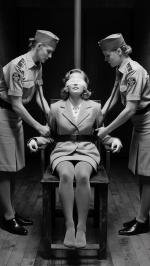
Chapter XIX: The Day of the Execution
I. The Preparation
The day was silent. Heavy, motionless air hung over the prison, a pale glow of light falling through the small barred windows.
The three young women — Ysabeau, Alinor, and Mariette, between twenty-four and twenty-six years of age, once of noble standing — awaited their final hour.
Two female warders entered with solemn composure, carrying several bundles of white fabric in their hands. They were simple, floor-length penitents' gowns made of thin cotton cloth, soft to the touch but of the plainest design. The wide, round neckline was cut in such a way that it could be pulled over the shoulders to bare the neck for execution.
White headscarves made from the same fine fabric accompanied them.
They were not tied without reason. According to the custom of the time, it was considered proper for a woman to appear before God and man with covered hair — especially in the face of death. Yet more importantly, the neck had to remain completely uncovered for practical reasons concerning the execution.
The headscarf was carefully smoothed over the forehead, drawn to the back, and tightly knotted low at the nape of the neck. Not a single hair was to remain visible. The women felt the firm, tight embrace at their temples and the back of their heads. It was a silent, humiliating ritual, demanding one final sign of feminine dignity and reverence.
The warmth of the fabric, the close, smooth pull over their skin, the knot at the nape — it was unmistakable that this was no gesture of mercy, but a preparation for erasure.
They were then given soft, white cotton bands, loosely tied around their wrists for the time being. Their feet remained unbound.
In an open wooden cart they were taken to the execution site. Not a word passed their lips. Drums accompanied the procession.
II. At the Execution Site
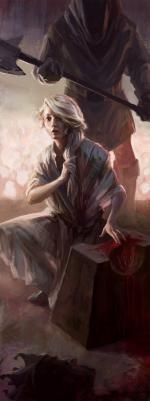
The scaffold was built of dark, rough wood. At its center stood the massive wooden block with a deep notch, an old wicker basket filled with fresh straw before it. The heavy axe lay ready, its dull sheen catching the light.
A priest waited. The executioner, a strong man in plain, unadorned clothing, prepared the proceedings with two assistants.
The condemned women were led one by one onto the scaffold. Now, just before kneeling, two assistants stepped forward.
The women’s feet were tied together with soft, white fabric bands — a practice serving less for safety than for form. At the moment of death, the condemned woman was not to throw herself to the side or leap up in pain, as this would complicate the executioner’s task and violate the dignity of the ceremony.
The condemned felt the firm but painless pressure of the fabric around their ankles. Every movement became more difficult, their bodies felt enclosed.
Then came the blindfold.
An assistant unfolded a white cotton cloth, carefully folding it several times until it formed a broad, soft band. It was gently placed over the condemned woman’s eyes and tied tightly at the nape of the neck, over the knot of the headscarf.
The necessity of the blindfold lay both in practical and spiritual reasons:
On one hand, it spared the condemned the sight of the block and the axe; on the other, it denied them the opportunity to disturb the procedure through eye contact with the crowd or the executioner.
The women felt the soft, cool fabric on their eyelids, the tension of the cloth at the back of their necks. It was a moment in which the rest of the world disappeared. Only the pressure, the darkness, and the dull pounding of their own pulse remained.
The collar of the penitents' gown was drawn over both shoulders so that the neck lay bare, the fabric cool against their skin. A final breath of wind touched the exposed nape.
III. The Execution
An assistant took Ysabeau by the upper arms, gently turned her, and led her to the block. With bound feet, she had to take small, tentative steps.
The executioner stood ready, the axe in hand.
Ysabeau was gently but firmly made to kneel. Her upper body was bent forward until her throat rested precisely in the notch of the block. The assistant carefully pressed down on the back of her head to stretch her neck.
The moment was still. Only the breathing of those present could be heard.
The executioner took aim, a drumroll faded away.
A single, precise stroke. The dull, wet thud, the brief clatter of the head into the basket.
Alinor and Mariette followed in the same rite.
Blindfold, binding of the feet, lowering of the collar, the step to the block, kneeling, the hand at the back of the head, the stroke.
The three bodies were laid in simple wooden coffins, the heads gathered in the wicker basket, until the execution was complete.
Conclusion
This version soberly and historically accurately shows why headscarves and blindfolds were used, how they physically felt, when and why the feet were bound, and portrays the experience of the condemned in those moments — without embellishment, without modern judgment, but with atmospheric clarity and precision.
I. The Preparation
The day was silent. Heavy, motionless air hung over the prison, a pale glow of light falling through the small barred windows.
The three young women — Ysabeau, Alinor, and Mariette, between twenty-four and twenty-six years of age, once of noble standing — awaited their final hour.
Two female warders entered with solemn composure, carrying several bundles of white fabric in their hands. They were simple, floor-length penitents' gowns made of thin cotton cloth, soft to the touch but of the plainest design. The wide, round neckline was cut in such a way that it could be pulled over the shoulders to bare the neck for execution.
White headscarves made from the same fine fabric accompanied them.
They were not tied without reason. According to the custom of the time, it was considered proper for a woman to appear before God and man with covered hair — especially in the face of death. Yet more importantly, the neck had to remain completely uncovered for practical reasons concerning the execution.
The headscarf was carefully smoothed over the forehead, drawn to the back, and tightly knotted low at the nape of the neck. Not a single hair was to remain visible. The women felt the firm, tight embrace at their temples and the back of their heads. It was a silent, humiliating ritual, demanding one final sign of feminine dignity and reverence.
The warmth of the fabric, the close, smooth pull over their skin, the knot at the nape — it was unmistakable that this was no gesture of mercy, but a preparation for erasure.
They were then given soft, white cotton bands, loosely tied around their wrists for the time being. Their feet remained unbound.
In an open wooden cart they were taken to the execution site. Not a word passed their lips. Drums accompanied the procession.
II. At the Execution Site
The scaffold was built of dark, rough wood. At its center stood the massive wooden block with a deep notch, an old wicker basket filled with fresh straw before it. The heavy axe lay ready, its dull sheen catching the light.
A priest waited. The executioner, a strong man in plain, unadorned clothing, prepared the proceedings with two assistants.
The condemned women were led one by one onto the scaffold. Now, just before kneeling, two assistants stepped forward.
The women’s feet were tied together with soft, white fabric bands — a practice serving less for safety than for form. At the moment of death, the condemned woman was not to throw herself to the side or leap up in pain, as this would complicate the executioner’s task and violate the dignity of the ceremony.
The condemned felt the firm but painless pressure of the fabric around their ankles. Every movement became more difficult, their bodies felt enclosed.
Then came the blindfold.
An assistant unfolded a white cotton cloth, carefully folding it several times until it formed a broad, soft band. It was gently placed over the condemned woman’s eyes and tied tightly at the nape of the neck, over the knot of the headscarf.
The necessity of the blindfold lay both in practical and spiritual reasons:
On one hand, it spared the condemned the sight of the block and the axe; on the other, it denied them the opportunity to disturb the procedure through eye contact with the crowd or the executioner.
The women felt the soft, cool fabric on their eyelids, the tension of the cloth at the back of their necks. It was a moment in which the rest of the world disappeared. Only the pressure, the darkness, and the dull pounding of their own pulse remained.
The collar of the penitents' gown was drawn over both shoulders so that the neck lay bare, the fabric cool against their skin. A final breath of wind touched the exposed nape.
III. The Execution
An assistant took Ysabeau by the upper arms, gently turned her, and led her to the block. With bound feet, she had to take small, tentative steps.
The executioner stood ready, the axe in hand.
Ysabeau was gently but firmly made to kneel. Her upper body was bent forward until her throat rested precisely in the notch of the block. The assistant carefully pressed down on the back of her head to stretch her neck.
The moment was still. Only the breathing of those present could be heard.
The executioner took aim, a drumroll faded away.
A single, precise stroke. The dull, wet thud, the brief clatter of the head into the basket.
Alinor and Mariette followed in the same rite.
Blindfold, binding of the feet, lowering of the collar, the step to the block, kneeling, the hand at the back of the head, the stroke.
The three bodies were laid in simple wooden coffins, the heads gathered in the wicker basket, until the execution was complete.
Conclusion
This version soberly and historically accurately shows why headscarves and blindfolds were used, how they physically felt, when and why the feet were bound, and portrays the experience of the condemned in those moments — without embellishment, without modern judgment, but with atmospheric clarity and precision.
Forum > Public / Images > On the way to the chop